
The "Northeast Corridor" Dilemma
For parents in the Northeast, the "college transition" often means their child is moving between states—perhaps from a home in New Jersey to a dorm in Philadelphia, or from Main Line PA to a campus in Boston.
One of the biggest hurdles families face is continuity of care. Most local psychiatrists are only licensed in one state. When your child crosses the state line, their care often stops.
Why "Campus Counseling" Isn't Always Enough
While university counseling centers are excellent for crisis intervention, they are often overwhelmed. Many operate on a "short-term model," meaning they provide 4–6 sessions before referring the student out to a local provider.
For students managing chronic conditions like ADHD, Treatment-Resistant Depression, or Anxiety, a "rotating door" of providers can lead to setbacks.
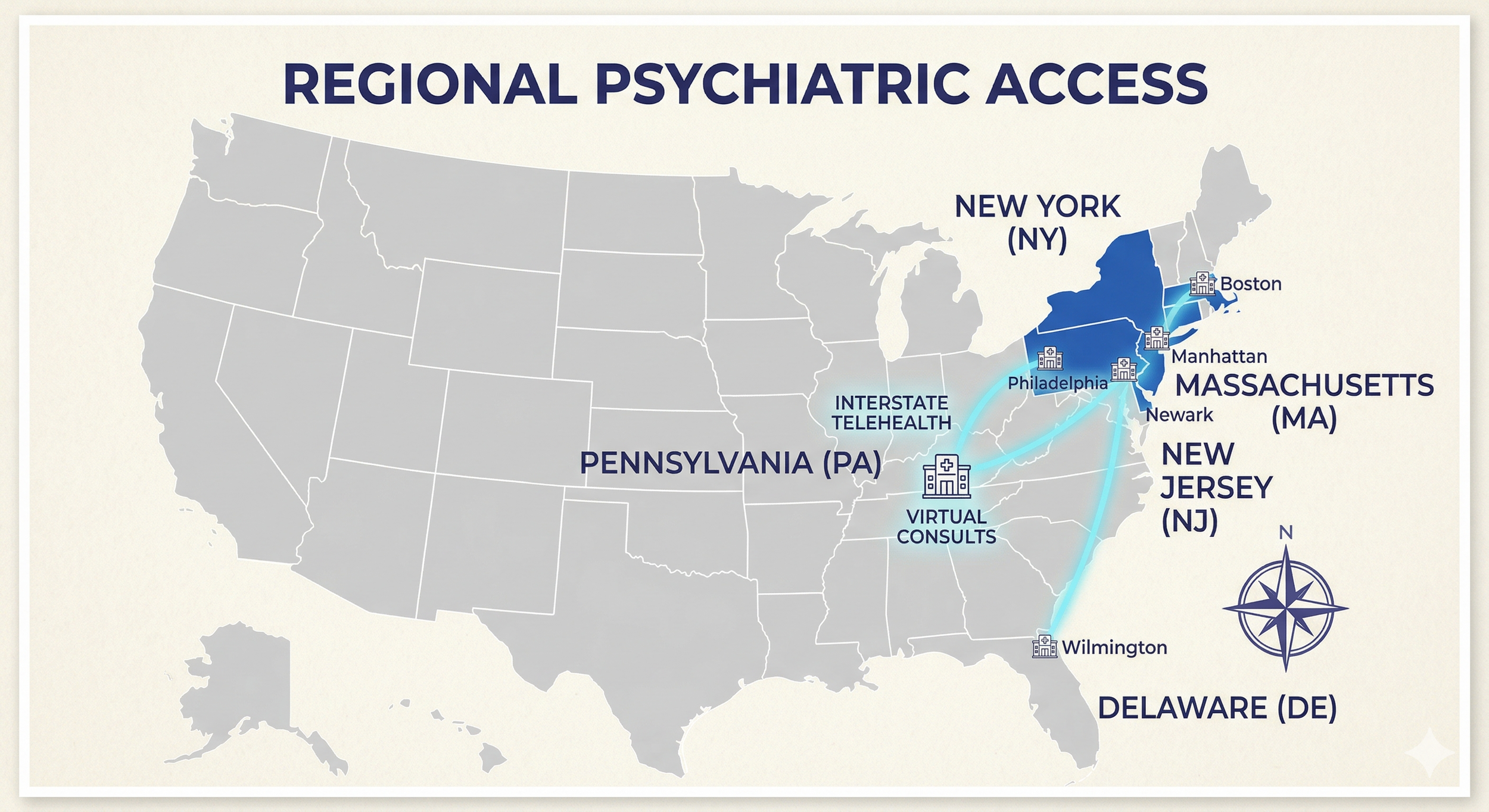
Dr. Scary is licensed to practice medicine throughout Pennsylvania, New Jersey, Delaware, New York, and Massachusetts.
3 Steps to Secure Your Student’s Mental Health
As a Board-Certified Psychiatrist and Clinical Assistant Professor at Tufts University and Temple University, I see this transition every semester. Here is how you can support your student from a distance:
1. Prioritize "Multi-State" Licensing
Ensure your child’s doctor is licensed in both their home state and their school state. I am licensed in PA, NJ, NY, MA, and DE. This means your student can have a session from their dorm in Boston on Tuesday and another from your living room in Philly during Spring Break without switching doctors.
2. Master the "Superbill"
Private psychiatry often provides a higher level of care but may be out-of-network. Ask for a monthly Superbill, which I always provide my patients. Most PPO insurance plans allow parents to submit these for significant out-of-network reimbursement, making expert private care accessible.
3. Focus on Executive Function
The "structure" of high school disappears in college. Many students who were "A-students" in high school struggle with the sudden lack of oversight. If your student is struggling with deadlines, our ADHD Medication Navigator is a great resource to help you understand modern treatment options that can help them regain their footing.
A Safety Net for the Next Four Years
My practice is designed to be a consistent safety net for your student. Whether they are navigating the rigors of UPenn, Harvard, Temple, or Drexel, we provide the clinical expertise and regional flexibility they need to succeed.
Are you a parent concerned about your student's transition? Reach out today to see how we can provide a consistent bridge of care.