Virtual Psychiatry Across the Northeast:
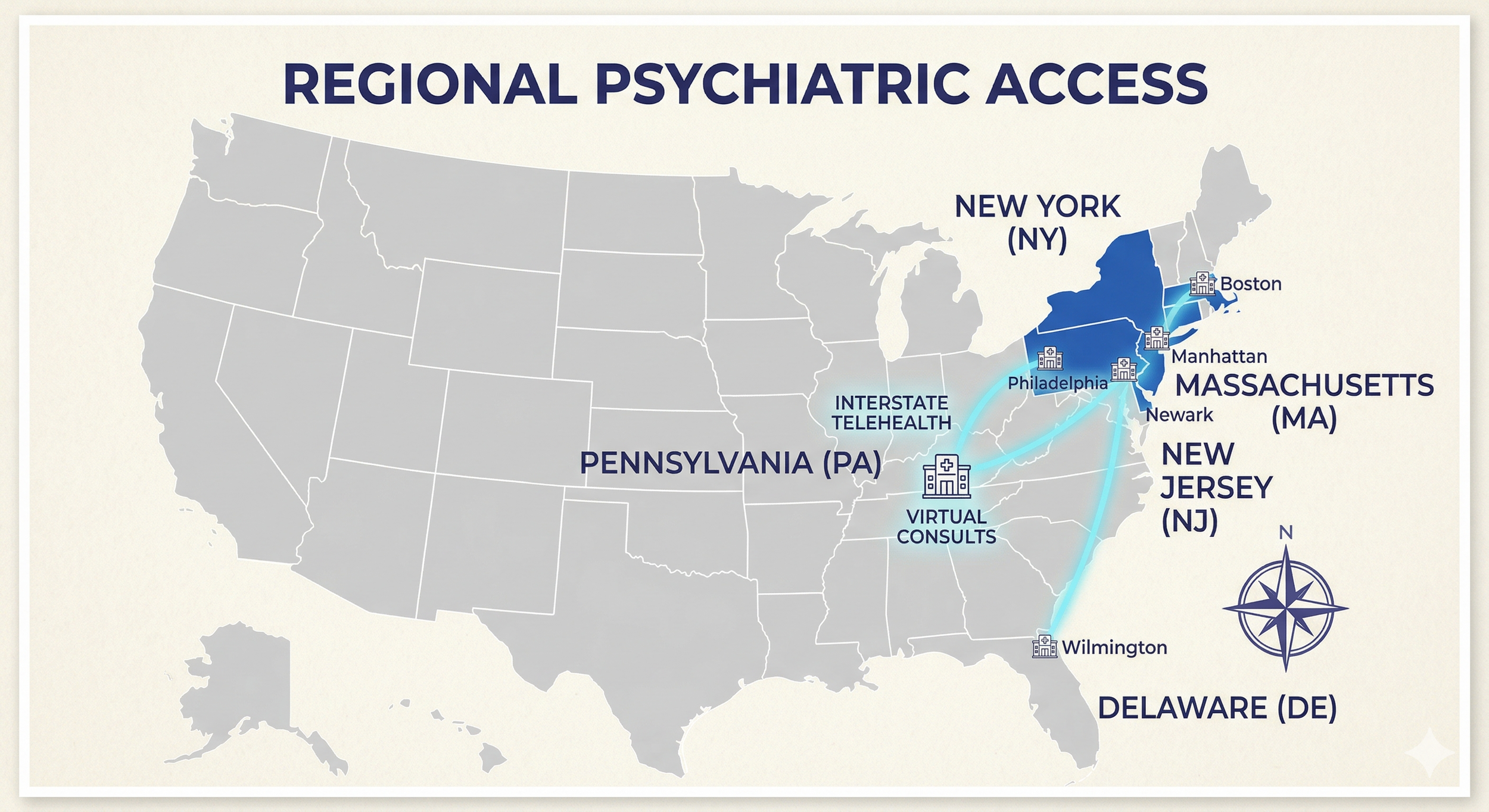
Licensed in PA, NJ, DE, NY, and MA
The Modern Patient is Mobile
In a world of hybrid work and frequent relocation, your mental health care shouldn't stop at the state line. Finding a psychiatrist who understands the specific regulations and pharmacy systems of multiple states is rare.
Thomas Scary, MD, provides high-quality, evidence-based psychiatric care and medication management for patients physically located in Pennsylvania, New Jersey, Delaware, New York, and Massachusetts. Whether you are a student moving for university, a professional split between Manhattan and Philadelphia, or a resident of the Ambler area seeking virtual convenience, we bridge the gap.

Why Choose a Multi-State Licensed Psychiatrist?
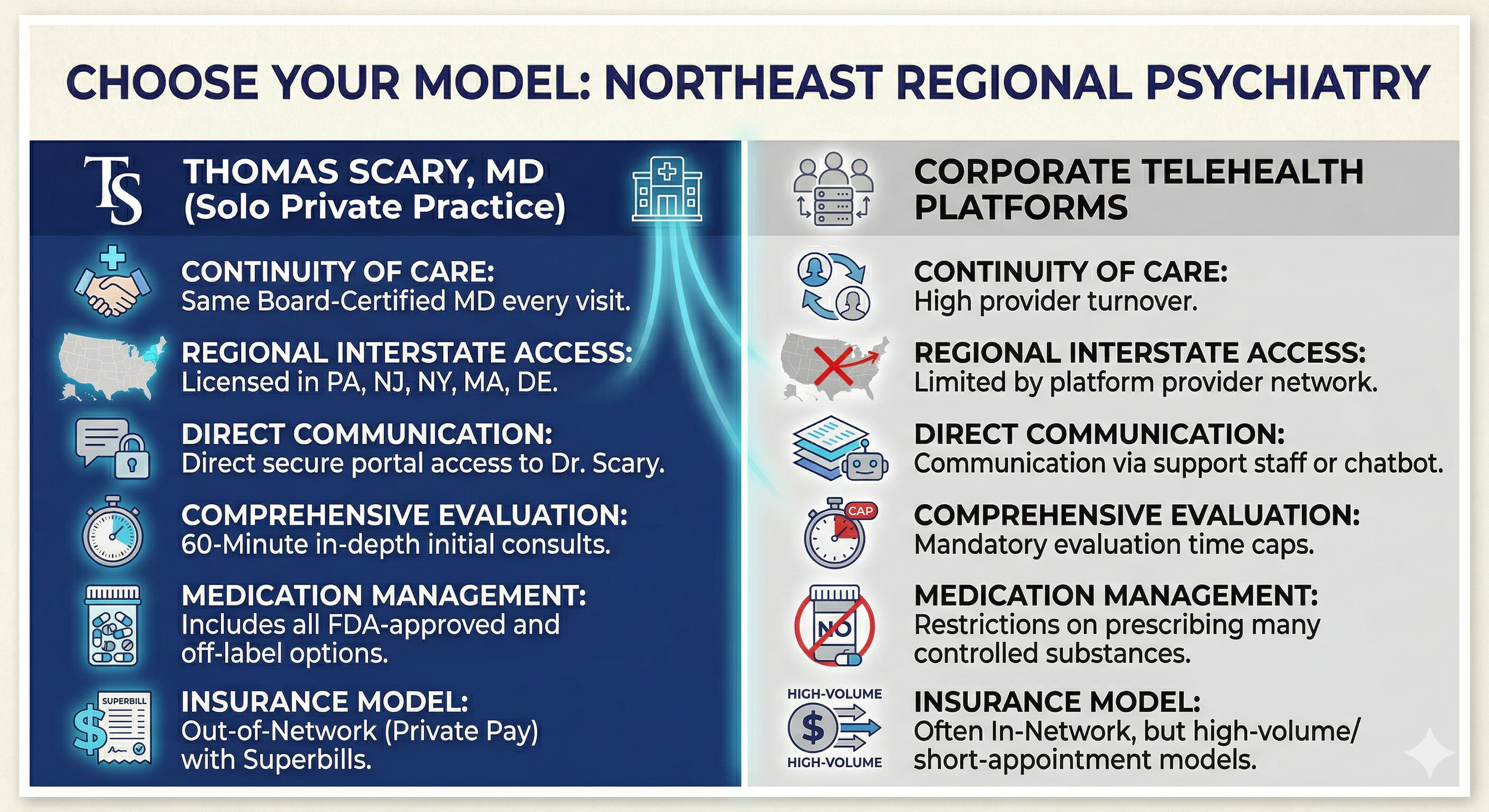
Most telehealth platforms assign you a random provider based on a single zip code. By working with a solo private practice licensed across the Northeast corridor, you gain:
Continuity of Care: If you live in Jersey City but work in Lower Manhattan, or attend school in Boston but summer in the Poconos, your treatment remains uninterrupted.
Regional Expertise: Dr. Scary understands the local pharmacy landscapes and prior authorization requirements across these four specific states.
Seamless Transitions: No need to "start over" with a new doctor just because you moved across the bridge.

Specialized Care for Professionals and Students
I specialize in treating high-functioning adults and students dealing with:
ADHD & Executive Dysfunction: Comprehensive Medication Management.
Anxiety & Work-Related Stress: Tailored for the fast-paced environments of Philly, NYC, and Boston.
Depression & Mood Disorders: Modern approaches to treatment-resistant cases.

Frequently Asked Questions
-
Yes. Because I am fully licensed in PA, NJ, DE, NY, and MA, I can electronically send prescriptions to any legitimate pharmacy within those five states, including mail-order services.
-
For patients located in PA, NJ, NY, and MA, I use secure, encrypted e-prescribing software that complies with all state and federal regulations for controlled substances. After a comprehensive initial evaluation and establishing a treatment plan, we can manage these prescriptions virtually, provided you remain within these licensed states.
-
Yes. Medical licensing laws require that the patient be physically located in a state where the physician is licensed at the exact time of the virtual visit.
-
I use a secure, HIPAA-compliant video platform. The initial evaluation is a comprehensive 60-minute deep dive into your history, symptoms, and goals.
-
Yes. As long as you are in a state where I am licensed during our appointments, I am able to see you.
-
Yes, frequently. In the Northeast it is common for me to see a patient who lives near Philadelphia, and who attends college at places like the University of Delaware, Rutgers University, New York University, Tufts University, and many more great schools.
-
I am an out-of-network provider. This "private pay" model allows for longer sessions, direct communication without administrative gatekeeping, and a higher level of personalized care. I provide a monthly "Superbill" (an itemized medical receipt) that patients in NJ, NY, DE, and MA can submit to their insurance for potential out-of-network reimbursement. Most PPO plans cover a significant portion of these costs.